
FTTH & PON
Feeder, distribution and drop segments using single-mode fiber, passive splitters and accessible termination points.
- Split ratio and ODN loss
- Drop-cable routing
- Subscriber connector condition
Reach, density, topology, service access and environmental conditions change what a suitable optical link looks like.
Use each profile as a starting point, then validate the actual link budget and project requirements.
Feeder, distribution and drop segments using single-mode fiber, passive splitters and accessible termination points.
High-density links with structured pathways, polarity control and a planned migration between duplex and parallel optics.
Access, aggregation, backhaul and fronthaul links where reach, wavelength use and outdoor protection are central.
Backbones connecting buildings, equipment rooms and floor distributors with maintainable labeling and records.
Fiber chosen for distance and immunity in locations exposed to moisture, dust, vibration or temperature variation.
Links and fiber-sensing systems used around utilities, transport, security and remote infrastructure.
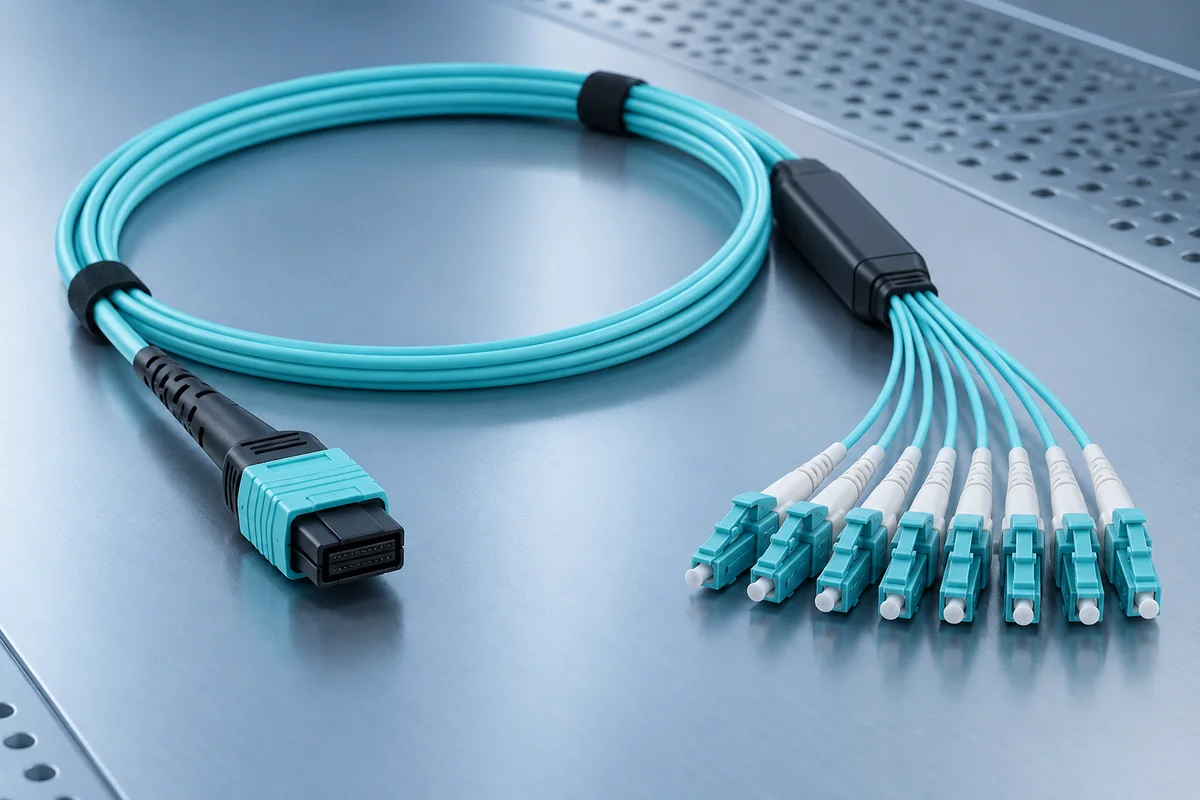
High-density assemblies can save space, but polarity, connector cleanliness and access become more important. Outdoor access networks may use fewer interface types yet demand better sealing and route protection.
A useful specification answers these questions even when the network type changes.
Identify host ports, transceiver form factor, connector and fiber category at both ends.
Record installed length, pathway limits, intermediate connections and environmental exposure.
Build a budget from specified values and reserve margin for aging, repair and measurement uncertainty.
Define inspection, continuity, polarity, insertion-loss and OTDR requirements before commissioning.
Distance, topology, interface, data rate and environment are the most useful first details.