
Model the route
Count cable sections, connectors, splices, splitters and passive devices. Identify access and protection needs.
A repeatable workflow reduces incompatible components, hidden loss and incomplete commissioning records.
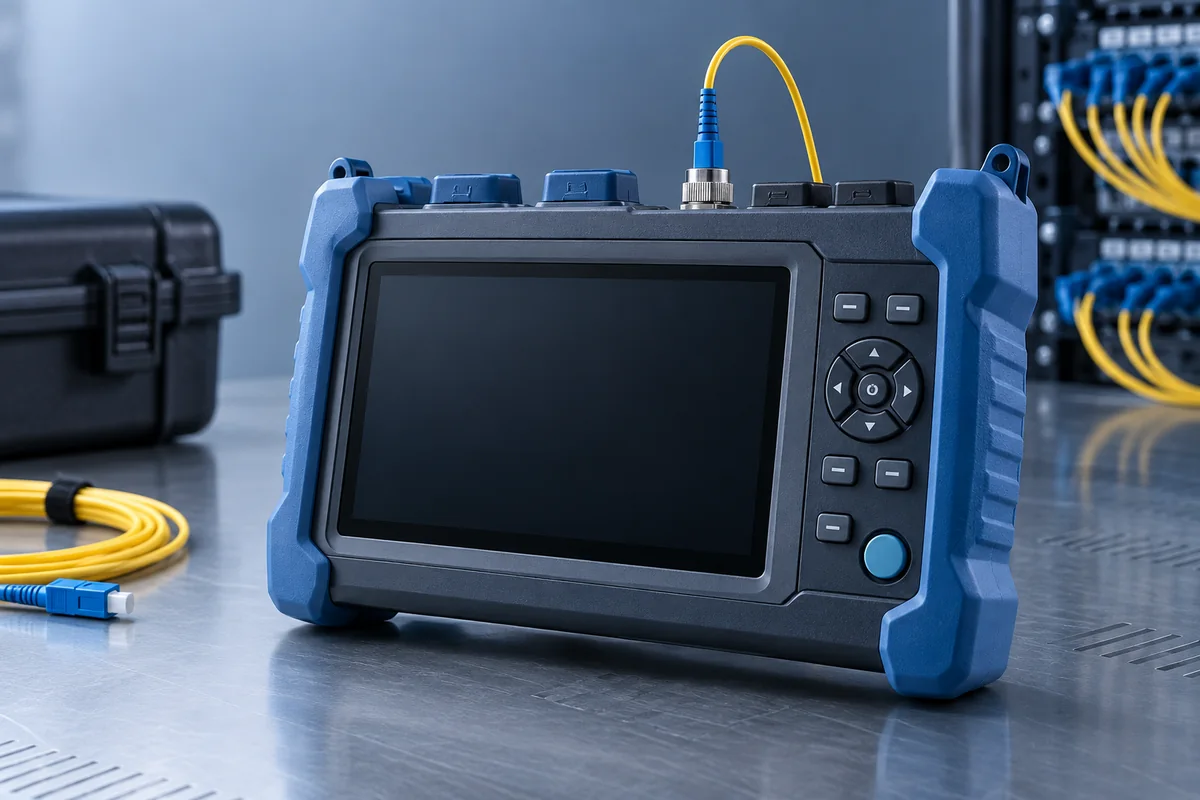
Record the endpoints, topology, route distance, required data rate, availability target, environment and expected service life before choosing a cable or transceiver.
The checklist can be applied to FTTH, enterprise, data-centre, industrial and telecom links.
Count cable sections, connectors, splices, splitters and passive devices. Identify access and protection needs.
Add specified component losses and aging margin, then compare with the transmitter/receiver operating window.
Protect minimum bend radius and pulling limits; inspect and clean connector end faces before mating.
Use power/loss testing for channel acceptance and OTDR where event location or route evidence is required.
No single reading describes every aspect of an optical link.
Checks contamination and end-face damage before a connector is mated.
Measures end-to-end insertion loss at the selected wavelength.
Estimates event location, reflectance and distributed attenuation along a route.
Confirms mapping before equipment is connected, especially for multifiber assemblies.
Commissioning records should connect each measurement to the cable identifier, endpoints, wavelength, reference method, equipment and date.
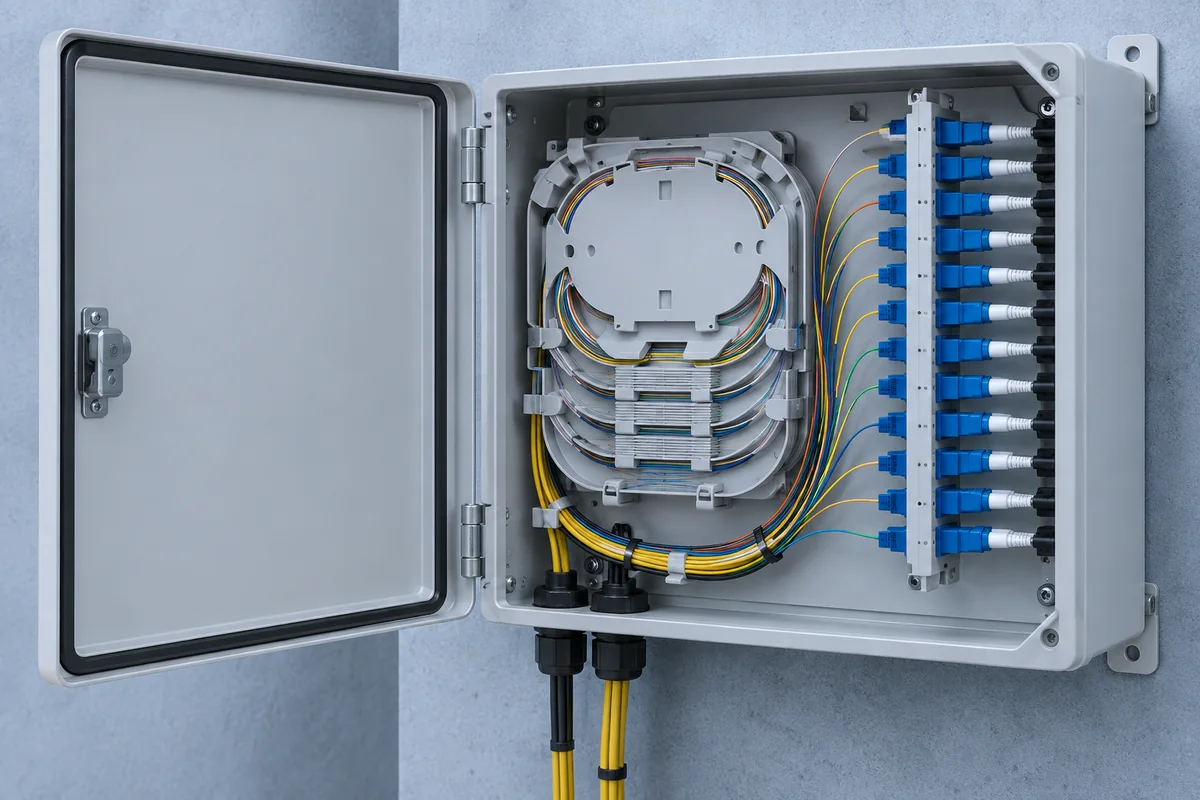
A concise technical brief makes product and testing discussions more useful.