COETZER OPTICALFIBER NETWORK SYSTEMS Technical Inquiry

Does single-mode fiber support 100G

Yes, single-mode fiber (SMF) can support 100G Ethernet using various QSFP28 transceivers, with distances ranging from 500 meters to 30 kilometers depending on the module type.100G over Single-Mode Fiber

Single-mode fiber is widely used for long-reach 100G Ethernet connections due to its low attenuation and high bandwidth capabilities. Several types of 100G transceivers are designed specifically for SMF:

  • QSFP28 LR4 (Long Reach 4-lane): Supports up to 10 km over standard single-mode fiber (OS2) using four 25G channels at 1310 nm. It is ideal for inter-building, campus, and metro-edge connections .
  • 100GBASE-DR Single Lambda: Supports up to 500 meters over SMF, suitable for data center leaf-spine connectivity where fiber runs are short .
  • 100GBASE-FR Single Lambda: Short-reach SMF module using a single 1310 nm EML laser, typically for up to 2 km connections in enterprise or metro networks .
  • 100GBASE-ER Single Lambda: Designed for up to 30 km over SMF, suitable for long-distance core or aggregation networks .
  • 100GBASE-ERL Single Lambda: Extends reach to 25 km, providing a cost-effective alternative for medium-long distance links .
Single-Fiber (BiDi) vs Duplex SMF

Some 100G QSFP28 modules use single-fiber BiDi technology, which allows full-duplex 100G communication over a single optical strand using Wavelength Division Multiplexing (WDM). This is different from standard duplex SMF, which uses two fibers (one for transmit, one for receive). BiDi modules are particularly useful in fiber-constrained environments, such as high-density data centers or metro aggregation networks .

Key Considerations
  • Wavelength: LR4 and single-lambda modules typically operate around 1310 nm, balancing low attenuation and manageable dispersion for multi-kilometer links .
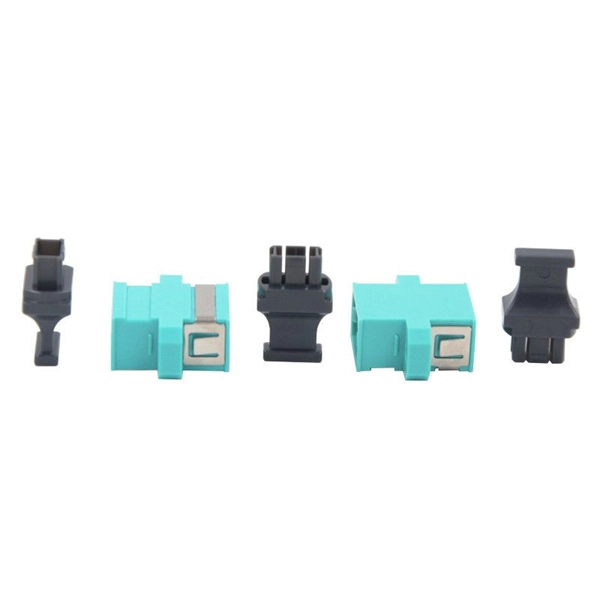
  • Connector Type: Duplex LC UPC connectors are standard for SMF 100G modules, while MPO connectors are used for parallel multimode fiber links .
  • Distance vs Module Type: The achievable distance depends on the module type, fiber quality, and link budget. For example, LR4 supports 10 km, while ER modules can reach 30 km .
  • Deployment: SMF 100G modules are suitable for data center interconnects, campus networks, and metro-edge facilities where high bandwidth and long reach are required . In summary, single-mode fiber can reliably support 100G Ethernet, with module selection determining the maximum distance and deployment scenario. SMF is preferred for long-reach, high-performance networks, while BiDi modules optimize fiber usage in constrained environments.
Does single-mode fiber support 100G

QSFP 100G LR4: 1310nm Single Mode Fiber Module Explained

QSFP 100G LR4 offers a reliable and standardized solution for delivering 100G Ethernet over single-mode fiber, balancing reach,

Arista 100G Transceivers and Cables: Q&A

The QSFP-100G-LR4 supports links up to 10km over duplex single mode fiber. Enabling FEC with QSFP-100G-LR4 optics on Arista

What type of fiber are you guys using for 100Gb runs (200m)?

The question is, are there any readily available fiber products to support this distance? Looks like OM5 is starting to show itself in the

OM4 100G Distance: How Far 100GBASE-SR4 Can Run in Practice

The short answer is straightforward: in standard data center environments, OM4 fiber supports 100GBASE-SR4 up to 100 meters.

100G QSFP28 / SFP-DD Modules and Cables FAQ | FS

The 100G BiDi transceiver refers to the QSFP28 single-mode fiber bidirectional optical module applied to 100G Ethernet. Each

100G Singlemode Armored Fiber Cable, LC-LC, 9/125, 50M (164 ft.)

As the amount of traffic in data networks grows, so does the need for devices and fiber cables to support higher bandwidths in cloud

Overview of 100g Single Mode Fiber: Composition, Mechanical

100G single-mode fiber offers exceptional bandwidth capacity due to its low signal attenuation and optimized light propagation

Technical note

This reference is intended for preliminary optical-network research. Compatibility, link budgets, installation methods, test limits and applicable standards must be verified for the specific project.

Still Have a Technical Question?

Use the inquiry form to describe a fiber link, component choice or testing question.

Start an Inquiry