COETZER OPTICALFIBER NETWORK SYSTEMS Technical Inquiry

New EMS Relay Protection Communication Station

A modern EMS relay protection communication station integrates protection relays with diverse communication interfaces to ensure reliable, real-time monitoring and control of power systems.Overview

An EMS relay protection communication station is designed to connect protection relays to a variety of communication networks, enabling rapid fault detection, isolation, and system stability management. These stations are critical for transmission line protection, transformer monitoring, and remedial action schemes (RAS), where timely communication between substations or generation facilities is essential to prevent cascading failures and equipment damage .

Key Components
  1. Protection Relays Devices like Siemens SIPROTEC relays provide modular protection for high- and medium-voltage lines, offering functions such as distance protection, differential protection, and overcurrent protection. They support fast tripping times (as low as 9 ms) and flexible I/O for integration with EMS systems .
  2. EMS Gateway / Communication Controller Modern gateways, such as the USR-EG828-EMS, act as the core controller within the station. They feature:
    • Multi-core processors for rapid edge computing and data acquisition
    • Multiple industrial-grade interfaces: RS485, GPIO, relay control channels, CAN buses
    • Network connectivity: dual-band WiFi6, Gigabit Ethernet, and 4G cellular support
    • Integration with cloud-based EMS management via protocols like MQTT
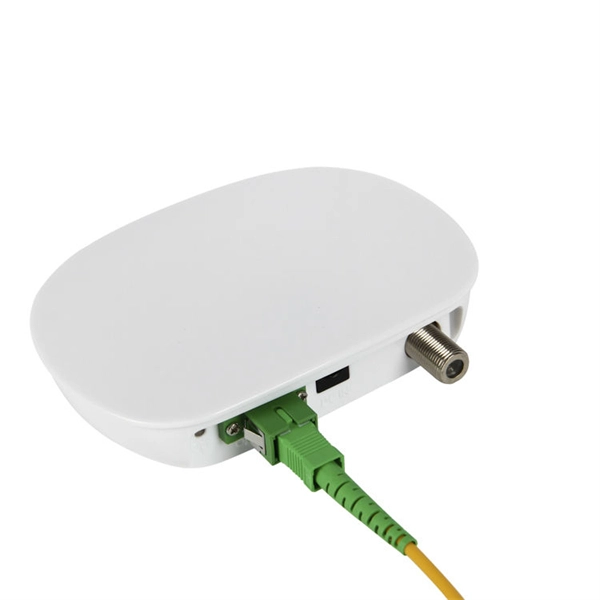
  3. Communication Media Stations use wired (fiber-optic, galvanic) and wireless networks to transmit data between relays and control centers. Communication devices convert protocols and ensure compatibility across different systems, maintaining reliability and low latency for protection schemes .
Protection System Functions

EMS relay protection stations support both binary and encoded data schemes:

  • Binary Data Schemes: Transmit discrete logic signals (e.g., trip/no-trip, line outage) for fast relay actions.
  • Encoded Data Schemes: Transmit analog or time-sensitive data (e.g., current, voltage, MW readings) for advanced protection and monitoring . These systems often integrate multiple functions, such as directional comparison blocking (DCB), current differential, and underfrequency/undervoltage load shedding, coordinated through the communication station to maintain system reliability .
Performance Considerations
  • Low latency and high reliability are critical to ensure protection relays operate within required timeframes.
  • Redundant communication paths and protocol conversion capabilities enhance resilience.
  • Edge computing at the station allows local processing of data, reducing dependency on central EMS servers and improving response times .
Applications
  • Substation automation: Real-time monitoring and control of breakers, transformers, and feeders.
  • Microgrid and energy storage integration: Centralized gateway collects data from BMS, PCS, and thermal management systems.
  • Remedial Action Schemes (RAS): Automatic corrective actions to prevent cascading outages. In summary, a new EMS relay protection communication station combines advanced protection relays, versatile communication interfaces, and edge computing capabilities to ensure fast, reliable, and coordinated protection across modern power systems .
New EMS Relay Protection Communication Station

Communication devices

The communication devices are used when connecting the protection relays to various types of wireless and wired (fiber-optic,

Technical note

This reference is intended for preliminary optical-network research. Compatibility, link budgets, installation methods, test limits and applicable standards must be verified for the specific project.

Still Have a Technical Question?

Use the inquiry form to describe a fiber link, component choice or testing question.

Start an Inquiry